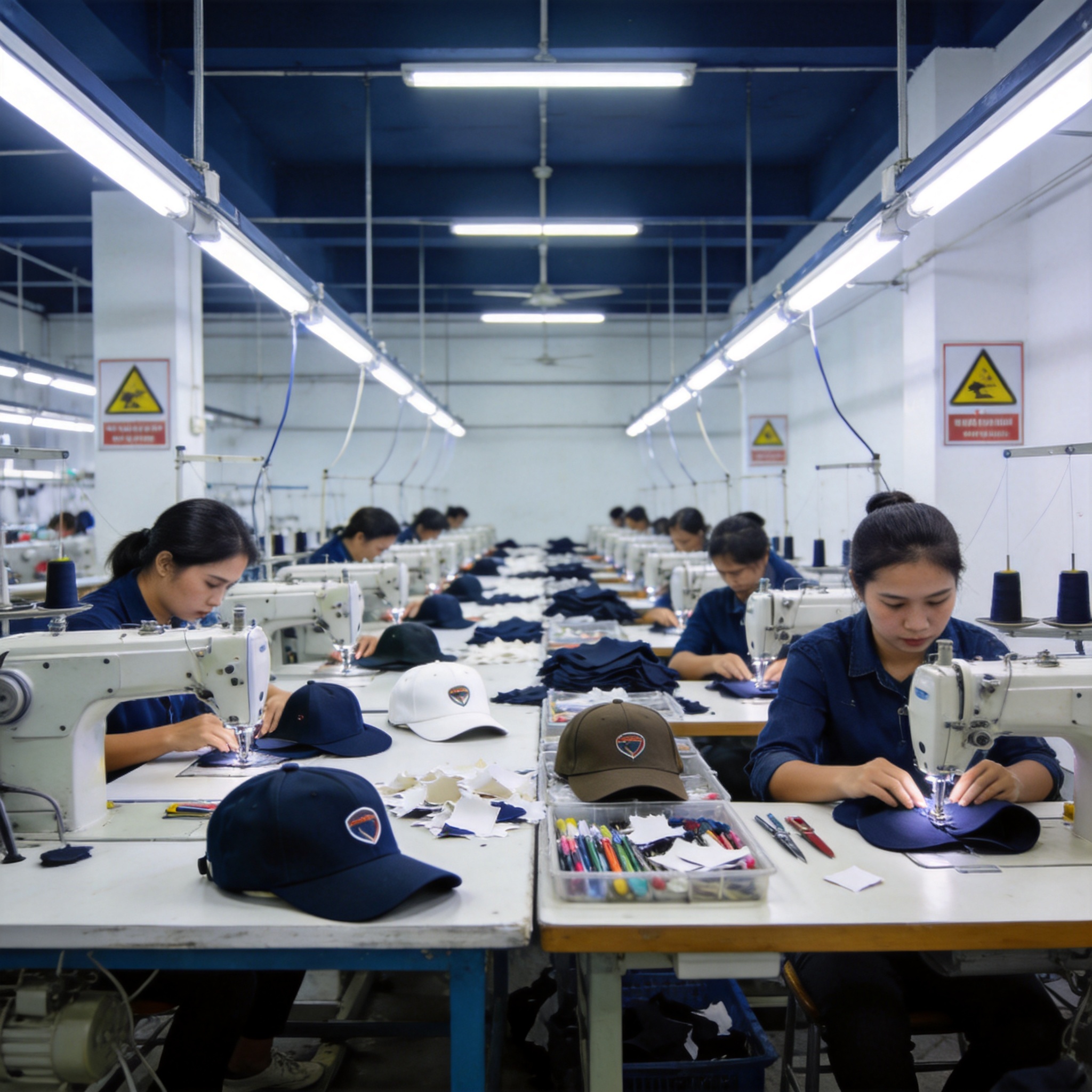
In brand marketing, outdoor sports and fashion industries, custom hats and custom caps have become essential products with wide applications. Whether you need promotional hats for corporate activities, team caps for sports clubs, or fashion headwear for retail brands, a scientific customization plan can effectively improve product quality, control costs and shorten the communication cycle. As a professional Vietnam-based hat manufacturer with 17 years of experience, DEVCOM has served more than 30,000 global brands. We have sorted out a full set of practical tips covering style selection, fabric matching, decoration techniques, ordering procedures and quality checking, which is a valuable reference for all buyers and brand managers with custom hat demands.
Tip 1: Select hat styles according to application scenarios to match target audiences. Choosing the right style is the first step of customization. For daily wear and street fashion, bucket hats, flat bill caps and stretch-fit caps are perfect choices due to their casual and versatile design. For outdoor sports, running and team building activities, mesh performance caps and long-brim visors are highly recommended for great air permeability and sun protection. In autumn and winter, knitted hats, cuffed beanies and pom beanies are mainstream options that combine warmth and fashion. Basic baseball caps are the top pick for corporate gifts and exhibition promotional hats, as they suit most people. For professional golf scenarios, customized golf visors are the best match. Before bulk ordering, clarify your usage scenarios to prevent inventory waste caused by inappropriate styles.
Tip 2: Choose fabrics wisely to balance comfort, durability and budget. Fabric directly determines wearing experience and service life, and it is also a core factor affecting customization cost. Pure cotton fabric is soft, skin-friendly and breathable, making it the mainstream material for daily custom caps for people of all ages. Polyester blended fabric is wrinkle-resistant, quick-drying and non-deformable, which is the ideal material for sports hats, keeping users dry even during long-time outdoor activities. Wool and acrylic fabrics feature excellent warmth, specially designed for winter beanies and knitted hats. For eco-friendly brands, GRS-certified recycled fabrics are a great option to meet the global demand for sustainable products and enhance brand image. If your products are sold to European and American markets, please choose OEKO-TEX certified fabrics to eliminate hidden dangers of harmful substances. Never compromise on fabric quality just for lower prices, as inferior materials will damage your brand reputation.
Tip 3: Optimize logo and decoration craftsmanship to highlight brand features. Embroidery, printing and leather patches are the three mainstream decoration techniques for custom hats, with different applicable scenarios. Embroidery is premium, durable and wash-resistant, which is the first choice for brand logos. Flat embroidery works well for simple lines and texts, while 3D puff embroidery can create outstanding visual effects for streetwear brands. Screen printing is cost-effective for large colorful patterns and gradients, ideal for bulk promotional hats. Leather patches and silicone badges present retro or minimalist styles, widely used in high-end fashion headwear and streetwear brands. Here is an important reminder: submit vector files such as AI and EPS for design, which can ensure ultra-clear patterns. If you only have picture files, make sure the resolution is above 300 DPI to avoid blurry finished products. In addition, use color contrast properly — light logos on dark hats and dark logos on light hats can greatly improve brand recognition.
Tip 4: Attach importance to hat sampling to confirm details before mass production. Sampling is an indispensable part of formal OEM/ODM hat production, and it is the key to avoiding large-scale production errors. We strongly suggest all clients request physical samples before placing bulk orders. You can check fabric texture, hat shape, stitching workmanship, as well as the position, color and size of logos against your design draft. A professional manufacturer can finish samples within 7 to 10 working days, and create 3D renderings in 30 minutes for early design confirmation. After receiving samples, carefully inspect uniform stitching, non-deformed brims, neat embroidery and standard sizes. Sign the sample confirmation form only after full approval, then the factory will start mass production. For clients who need small-batch trial orders, you can directly choose from over 2,000 ready-to-ship hat styles in our warehouse to test the market quickly without extra sampling.
Tip 5: Clarify order and delivery details to ensure smooth cooperation. After confirming styles, fabrics, techniques and samples, sort out three critical order details. Firstly, about size and closure design: adjustable snapbacks and velcro straps (one size fits most) are recommended for adult hats to fit various head circumferences; fixed sizes are suitable for kids’ hats and professional sports caps. Secondly, communicate the lead time clearly. The standard production cycle for bulk orders is 20 to 35 days. If you have urgent demands for events or exhibitions, inform the factory in advance for priority arrangement. Thirdly, confirm quality standards. Cooperate with manufacturers adopting the international AQL 2.5 quality inspection standard to guarantee qualified finished goods. Besides, select suppliers with reliable after-sales services, such as the 3-month no-reason return policy, to reduce procurement risks.
Tip 6: Pay attention to certifications for cross-border sales. If your custom hats are exported to overseas markets such as Europe, America and Southeast Asia, factory and product certifications are essential. Factories that have passed the amfori social audit comply with international labor standards, winning more trust from overseas brands. GRS recycled standard certification and OEKO-TEX Standard 100 are basic qualifications for entering cross-border e-commerce platforms and physical supermarkets. Verify factory certifications in the early customization stage to prevent goods detention due to compliance problems and ensure smooth international trade.
In conclusion, high-quality custom hats are not only about low prices. You need to select styles based on scenarios, pick fabrics based on brand positioning, choose techniques based on design styles, control details via samples, and guarantee quality and delivery with reliable manufacturers. Whether you order small-batch fashion items, corporate gift hats or large overseas orders with tens of thousands of pieces, following the above tips will make your OEM/ODM hat customization more efficient and competitive. DEVCOM will keep providing one-stop customized solutions for global clients with comprehensive services and rich industry experience.
Complete Guide to Custom Hats: Practical Tips for Style, Fabric & Customization
Planning to order high-quality custom hats and custom caps for brand promotion, sports events or fashion retail? Based on professional hat manufacturing experience, this article shares practical tips from 5 key aspects: style selection, fabric optio…