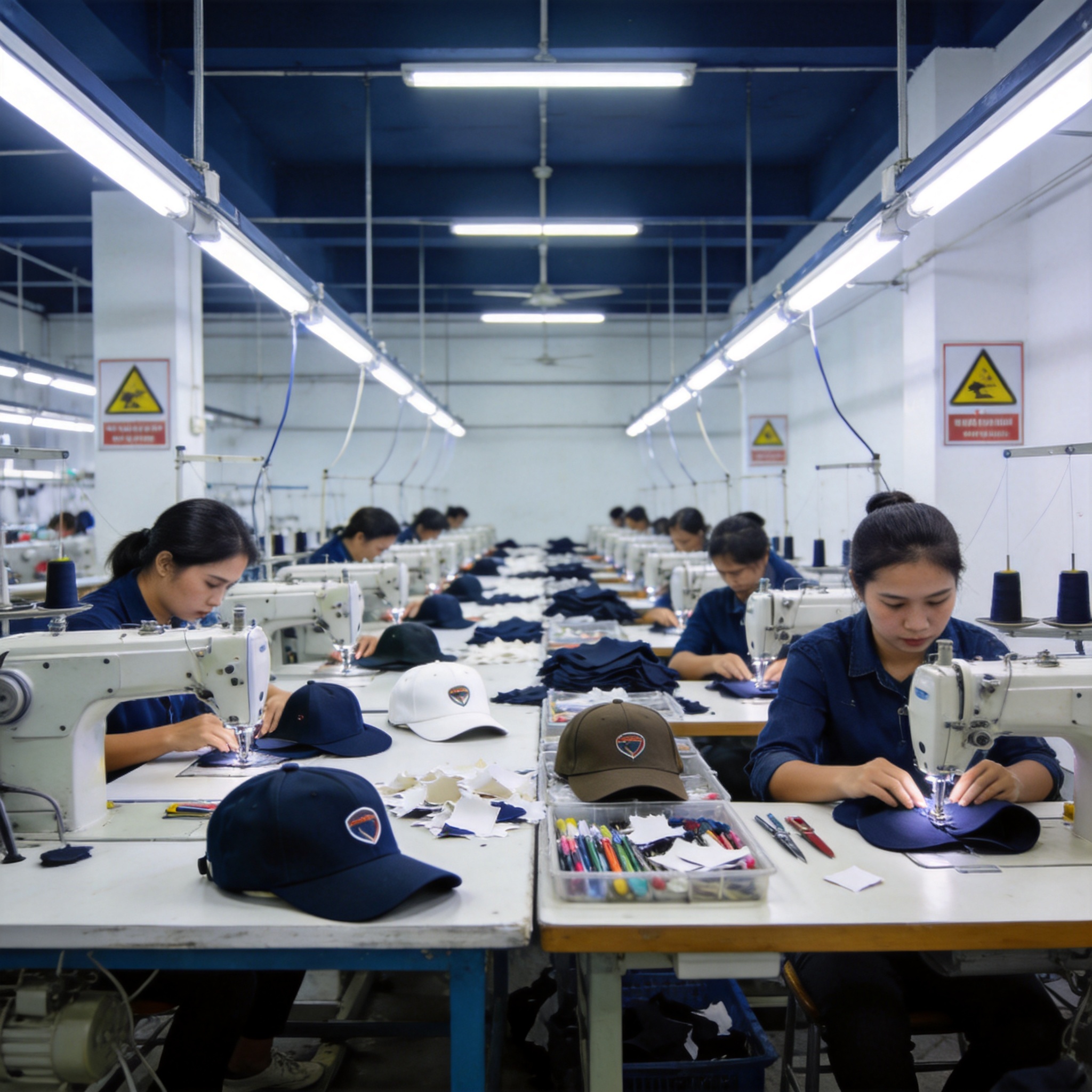
With versatile styles, great practicality and excellent brand display effects, baseball caps are one of the most popular headwear worldwide. Custom caps are the top choice for streetwear brands, sports teams and enterprises. Various styles such as flat bill caps, curved bill caps, mesh back caps and stretch-fit caps require different skills in selection, wearing and maintenance. Many users encounter problems like improper sizes, mismatched outfits, deformed shapes, peeling logos and curled brims. With over 17 years of production experience, DEVCOM, a reliable Vietnam hat manufacturer, summarizes a complete set of practical skills based on numerous product cases and global customer feedback, helping users maintain all kinds of branded caps and extend their service life.
1. Selection Tips: Choose Right Size, Silhouette & Fabric
Proper selection is the first step to use baseball caps well. You need to consider head circumference, usage scenarios and fabric characteristics comprehensively.
Size Selection
Use a soft tape to measure the head circumference above eyebrows and ears. The standard adult head circumference ranges from 54cm to 59cm. Most regular baseball caps with velcro or snapback closures are one-size-fits-all (OSFM) for most people. Choose extended adjustable styles for head circumference over 60cm, and stretch-fit caps for smaller heads. Kids’ caps must be customized according to actual head size with 0.5-1cm extra space to avoid discomfort. If the cap is too loose after arrival, add inner size tapes; if too tight, steam the cap with low-temperature steam and stretch it gently to fix the shape.
Silhouette Selection
Classic curved bill caps are ideal for daily commuting and outdoor sports, with ergonomic brims for sun protection without blocking sight. Flat bill caps with stiff brims are favored for street fashion. Mesh back caps with mesh rear panels feature superior air permeability, perfect for summer outdoor activities. Soft elastic caps are comfortable for long-time wear. Structured caps keep firm shapes without collapsing, suitable for corporate gifts and formal events; unstructured caps present a casual lazy style for daily looks.
Fabric Identification
Cotton twill is soft, skin-friendly and breathable for daily wear. Polyester blend and quick-drying fabrics are wrinkle-resistant, wear-resistant and sweat-wicking for high-frequency sports. Recycled fabrics with GRS certifications are recommended for eco-oriented cross-border purchasing. When selecting caps, check fabric toughness, even stitching and neat eyelets to pick high-quality custom hats.
2. Styling Tips: Match with Face Shapes & Occasions
Reasonable matching can highlight the advantages of baseball caps. Match styles according to face shapes and occasions to avoid styling mistakes.
Face Shape Matching
Round faces look better with high-crown curved caps and narrow-brim flat caps to lengthen facial lines. Wide-brim caps are suitable for long faces to adjust visual proportion. Soft curved caps work well for square faces to soften jaw lines. Oval faces fit all mainstream custom caps.
Occasion Matching
For daily leisure: Solid-color curved caps match T-shirts, hoodies and jeans for a casual look. For street fashion: Color-blocked flat bill caps and vintage mesh truck caps pair with workwear and streetwear to show personality. For sports & fitness: Mesh back caps and functional quick-drying caps balance air permeability and flexibility. For business & exhibitions: Minimalist solid-color caps match uniforms or formal clothes to present a steady brand image.
Color Matching
Classic colors including black, navy and khaki are versatile for most outfits. Monochrome matching and small-area color blocking are popular for trendy looks. Low-saturation solid colors and contrasting logos are preferred for business scenarios to enhance brand recognition.
3. Material-Based Cleaning Tips: Prevent Deformation, Fading & Craft Damage
Improper cleaning is the main cause of damaged caps. Adopt targeted cleaning methods for different fabrics and crafts, especially protect embroidery and screen printing areas.
Cotton twill baseball caps
Hand wash is recommended. Use cold water below 30℃ and neutral detergent. Gently scrub stains with a soft brush and avoid rubbing embroidery and printed areas hard. Absorb water with dry towels instead of twisting to prevent brim deformation. If machine washing is necessary, put the cap into a laundry bag and select the gentle mode.
Polyester blend & mesh back caps
These fabrics are durable for gentle overall washing. Never use bleach to prevent yellowing and aging. Clean dust in mesh gaps with a soft brush and air dry after washing.
Custom caps with prints, leather patches & silicone labels
Do not soak for a long time. Adopt partial spot cleaning. High temperature will lead to cracked prints and loose patches. Always dry in shaded areas and stay away from direct sunlight.
Quick-drying functional caps
Clean quickly with water and a small amount of detergent, and shorten soaking time to protect waterproof and UV-resistant coatings.
4. Storage & Daily Protection: Keep Original Shape for a Long Time
Improper storage causes collapsed crowns, curled brims and loose stitches. Master scientific storage methods to maintain cap appearance.
Short-term storage (daily use)
Place curved and flat caps upright or hang them on special cap racks. Do not flip caps over to squeeze brims. Avoid heavy pressure on mesh back caps to prevent mesh deformation.
Long-term storage (seasonal storage)
Clean dust and sweat first. Stuff tissues or towels inside caps to support silhouettes, then put them into dedicated cap boxes. Store boxes in cool and dry places, away from moisture and sunlight to prevent mildew and fading. Bulk buyers are suggested to stack caps in layers to avoid damage from heavy goods on the top.
Exclusive protection for customized crafts
Reduce friction between embroidery areas and hard objects during wear. Wipe inner sweatbands timely after sweating, as long-term sweat immersion will damage threads and fabrics. Avoid prolonged exposure to rain. Absorb water immediately with dry cloth and air dry naturally if caps get wet. Take moisture-proof measures for bulk custom caps in cross-border warehouses to guarantee delivery quality.
5. Minor Defect Repair Tips: Restore Appearance at Low Cost
Minor damages are inevitable during daily use. Simple repair skills can fix problems quickly and extend service life.
Slightly curled brims
Cover curled parts with warm damp cloth, press flat and weigh down with heavy objects. Dry naturally to restore the original brim radian.
Loose embroidery stitches & extra threads
Repair loose stitches with small needles and threads. Cut extra threads directly instead of pulling embroidery hard to avoid large-area damage.
Slightly shrunk fabric
Steam caps with low-temperature steam, stretch gently along fabric textures and air dry to restore original size.
Small local stains
Wipe stains with cotton swabs and a little neutral detergent. Control the cleaning range to prevent large-area fading.
Conclusion
To keep baseball caps and custom caps in good shape, stylish appearance and complete functions for a long time, the key is proper selection, reasonable styling, classified cleaning and standard storage. These skills are practical for individual daily use, as well as product maintenance and after-sales guidance for brands and cross-border wholesalers. As a professional Vietnam hat manufacturer, DEVCOM provides full-range custom hats and one-stop OEM/ODM services, and continuously shares professional headwear knowledge. Whether you need ready-made baseball caps or exclusive branded custom styles, we deliver cost-effective solutions with mature craftsmanship, strict quality control and thoughtful services.
Practical Baseball Cap Tips: Selection, Styling, Cleaning & Maintenance Guide
As mainstream custom hats, baseball caps are widely used for daily outfits, sports and brand promotion. Based on rich experience from DEVCOM, a professional Vietnam hat manufacturer, this article shares practical skills for custom caps, including se…