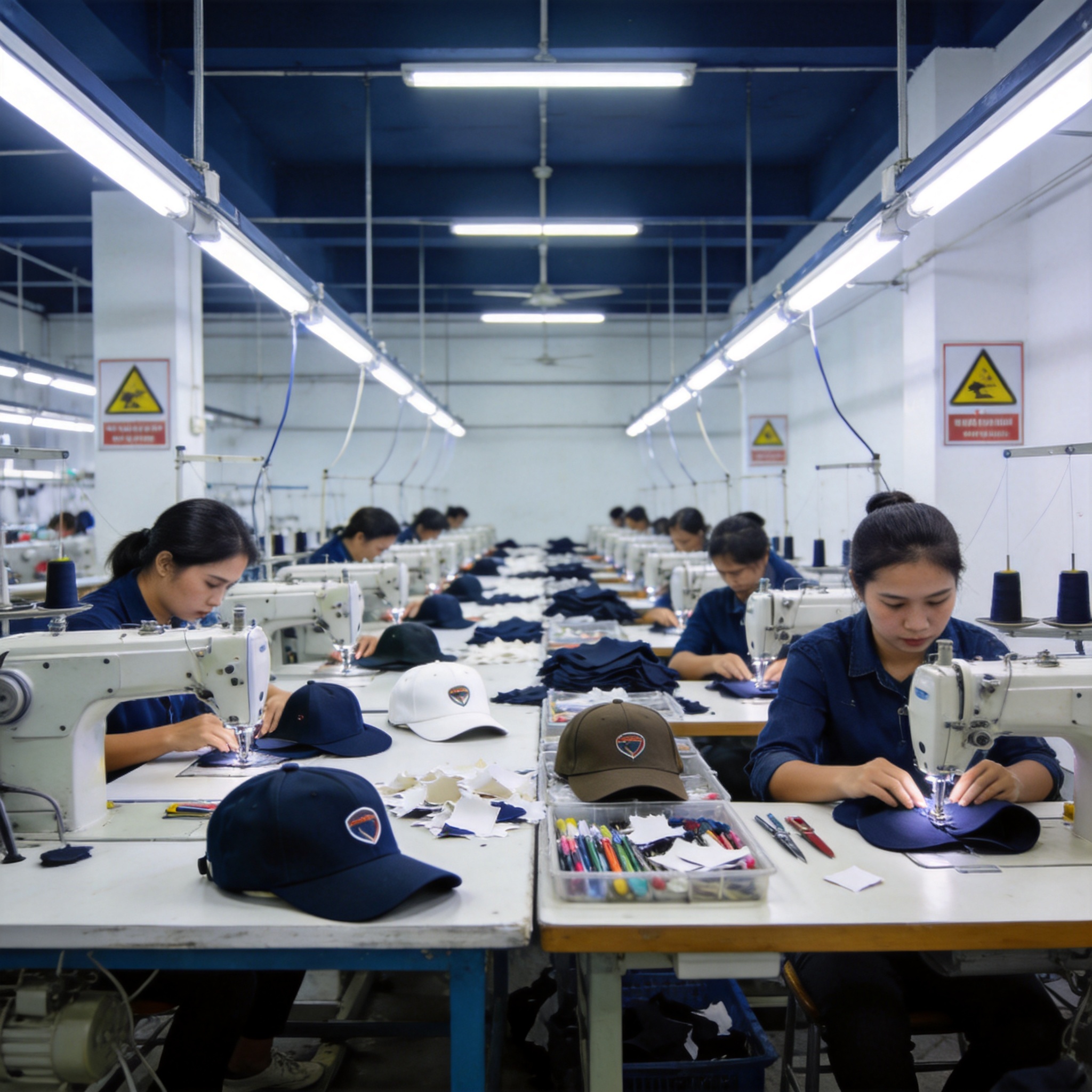
As a timeless global headwear style, custom bucket hats are widely used in street fashion, outdoor activities, corporate gifts and kids’ outfits, thanks to their versatile styles, excellent sun protection and face-flattering silhouettes. A successful bucket hat design is the perfect combination of silhouette, fabric, color, craftsmanship and application scenarios, instead of simple style splicing. Many creative designs fail mass production due to deformed shapes, blurred logos and unreasonable structures. As a professional Vietnam hat manufacturer with over 17 years of experience, DEVCOM specializes in full-range custom hats production and has accumulated numerous OEM/ODM bucket hat design cases. Today we elaborate on the complete design specifications for bucket hats from concept to finished products, combining overseas market demands, fashion trends and mass production standards.
First, silhouette and structural design: the foundation of wearing experience and styling. The silhouette is the framework of a bucket hat, which determines three key factors: three-dimensional sense, fitness and durability. It is the first step of design. At present, mainstream mass-produced styles include six-panel bucket hats and basic one-piece bucket hats. The six-panel splicing craft is the top choice for mid-to-high-end products. The multi-piece sewing creates a round and full crown, maintaining a 3D shape without collapsing. It can keep the original outline after washing and long-distance transportation, ideal for streetwear brands and high-end outdoor collections. The basic one-piece structure features simple design and lower cost, mainly for affordable gift hats and fast-fashion retail products.
For size parameters, the crown depth of standard adult bucket hats is 9–10 cm. We reserve 1–2 cm extra space on the standard head circumference to ensure a snug fit without tightness, and prevent slipping during movement. Wide brim bucket hats are designed for outdoor sun protection, with brim width ranging from 7 cm to 10 cm. Built-in shaping wires are added to stop the brim from curling. The brim width of daily casual styles is 6–7 cm, balancing beauty and flexibility. Adjust styles according to different overseas markets: enlarge brims and optimize ventilation for hot and humid areas such as Southeast Asia and the Middle East; adopt loose oversized silhouettes for European and American markets; and short-brim & shallow-crown minimalist styles are popular in Japanese and Korean markets. For double-sided bucket hats, balance the fabric thickness of two sides to avoid uneven drape. For kids’ styles, reduce overall dimensions and reinforce stitching at hat openings to prevent deformation.
Second, fabric selection design: match seasons, scenarios and cross-border compliance. Fabric affects the touch, drape, air permeability and craft compatibility of bucket hats. Designers need to select fabrics based on seasons, usage scenarios and export standards. For spring and summer, pure cotton, cotton-polyester blend and lightweight quick-drying nylon are preferred. High-density twill cotton features neat drape and moderate stiffness, becoming the mainstream fabric for daily trendy styles. Quick-drying nylon with UPF sun protection treatment is the standard material for outdoor bucket hats, which is waterproof and breathable for hot and rainy environments. In autumn and winter, thickened fabrics such as washed canvas, wool and corduroy are widely used to create vintage textures.
With the boom of global sustainable fashion, recycled fabric has become a must for cross-border exports. Custom bucket hats made of GRS certification recycled polyester and recycled cotton comply with eco-friendly trends, and the certification is also a basic requirement for entering European and American supermarkets and cross-border platforms. Avoid conflicts between fabrics and crafts in the design stage: thin linen is not suitable for large-area embroidery, as stitching may cause fabric distortion; heavy wool is not recommended for heat transfer crafts, because high temperature will damage fabric textures. In addition, markets in the Middle East and Southeast Asia prefer light-colored and bright breathable fabrics, so color matching can be adjusted according to local aesthetics.
Third, logo and pattern placement design: follow visual logic to balance recognition and beauty. Bucket hats have soft round crowns rather than flat surfaces, so the placement, size and style of logos are different from custom caps, which is a common pain point in design. There are five mainstream decoration positions with respective applicable scenarios. The center of the front crown enjoys the highest visibility, perfect for main brand logos and corporate marks, widely used for gift hats and retail bestsellers. The recommended logo width is 6–9 cm; oversized logos will deform with hat wrinkles. Side panels present a low-key and luxurious style, suitable for small brand icons and secondary logos for minimalist designs. The back crown is generally used for auxiliary information such as brand websites, slogans and event years. The brim fits small patterns and mini logos for streetwear styles, but it is not ideal for main logos due to poor long-distance recognition.
Follow two color matching rules: adopt high-contrast colors for corporate gift hats to enhance brand recognition; use tonal gradients and small-area color blocking for trendy styles to add layers. Please provide vector files such as AI and EPS with resolution above 300 DPI to ensure clear embroidery and printing patterns.
Fourth, decoration craft matching design: select crafts based on positioning to balance texture and cost. Match four mainstream crafts including embroidery, screen printing, heat transfer and fabric/leather patches according to brand positioning and budget. Embroidery delivers premium texture and great durability. Flat embroidery with delicate lines fits business brands and light-luxury series; 3D puff embroidery creates strong three-dimensional effects and is popular among streetwear brands for small logos and patterns. Screen printing is cost-effective for large full prints, gradient patterns and slogans, widely used for bulk gift hats and fast-fashion products. Heat transfer boasts high color reduction for complex colorful patterns, but its durability is weaker than embroidery, so it is suggested for short-term event hats.
Lightweight decorations such as fabric labels, genuine leather patches and silicone labels are trending in recent years, usually embellished on hat sides and brim seams to create retro and minimalist looks. Note that complex multi-layer crafts will increase sewing difficulty and production costs. Simplify craft combinations for mass-produced styles to guarantee production efficiency.
Fifth, detail and accessory design: improve product delicacy and competitiveness with small tweaks. Details determine the market performance of finished products. Inner sweatbands of bucket hats are preferably made of high-elastic sweat-absorbent cotton to enhance comfort for long-time wear. For outdoor styles, add invisible windproof cords and inner mesh structures to improve practicality. Regular adult styles do not need extra adjustment structures, while plus-size and kids’ styles can be equipped with invisible elastic bands to fit more head circumferences.
All accessories for export products must meet international safety standards: avoid sharp metal parts and use non-toxic eco-friendly dyes and accessories for kids’ hats; products sold to Europe and America need to comply with OEKO-TEX standards to eliminate hidden dangers of harmful substances. Custom tapes, contrast stitching and hidden labels can differentiate basic bucket hats from homogeneous products and increase added value.
Sixth, design and prototyping: the final step from creativity to mass production. After finalizing the complete design plan, bucket hat prototyping is the key process to verify the feasibility of silhouettes, fabrics and crafts before mass production. After receiving your design drafts, color charts and fabric requirements, DEVCOM’s professional design team can create 3D renderings within 30 minutes for visual preview. Physical samples will be finished within 7 to 10 working days.
When you receive samples, check items one by one: whether crown depth and brim width comply with design parameters; whether the left and right silhouettes are symmetrical; whether logos and patterns are correctly positioned; whether stitching is even and firm; whether fabric drape and colors match the design draft. Meanwhile, test washing stability and wearing fitness. Sign the sample confirmation form only after full approval, then we will start mass production within 20 to 35 working days. For niche creative styles, you can also select from over 2,000 ready-to-ship hat styles in our factory as prototypes to greatly reduce sampling costs and trial risks.
In conclusion, a mature design of custom bucket hats starts with silhouette structure. Designers need to select suitable fabrics according to seasons and target markets, plan logo positions and crafts based on application scenarios, optimize wearing experience with detailed accessories, and verify final effects via prototyping. As a reliable Vietnam hat manufacturer, DEVCOM provides one-stop OEM/ODM bucket hat design services including creative planning, drawing optimization, 3D modeling, sampling and mass production with an experienced design team, complete production equipment and full certifications. Whether you need trendy items, outdoor gear or corporate gift hats, we can turn your design concepts into high-quality custom hats that meet market demands.
Complete Bucket Hat Design Guide: Silhouette, Fabric, Logo Craft & Production Tips
High-quality custom bucket hats rely on well-designed silhouettes, matched fabrics and refined decorations. Based on rich OEM/ODM experience from DEVCOM, a professional Vietnam hat manufacturer, this article explains the full design process of bucke…