
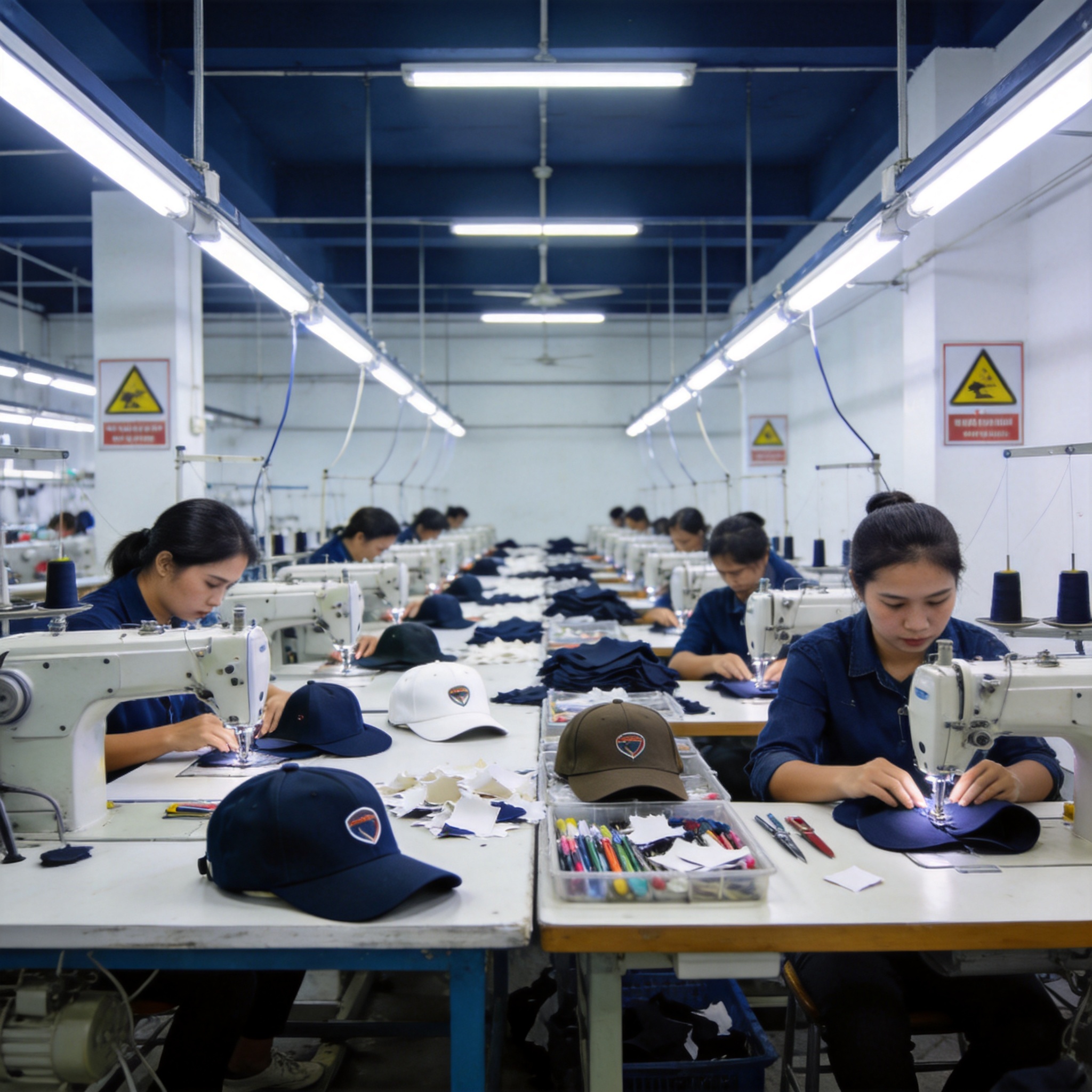
Before designing a hat, understanding market trends is crucial. According to recent industry analysis and market data, the following hat types continue to dominate in 2026:
Baseball Caps: Remain the cornerstone of streetwear. Whether classic curved brims or structured flat-brims (Snapbacks), adding breathability through mesh splicing (Trucker Hats) makes them a bestseller for hot climates .
Bucket Hats: With their casual style and sun protection functionality, they maintain high popularity among young consumer groups. Wide brims not only provide better UV protection but also offer a larger canvas for pattern design .
Knitted Hats/Beanies: Driven by seasonal demand, lightweight knits are popular in spring and autumn, while fleece-lined or Merino wool materials are the top choice for winter warmth .
An excellent hat design strikes a balance between aesthetics and functionality.
Material Selection: Cotton-polyester blends combine the comfort of cotton with the durability of polyester, making them a cost-effective mainstream choice. For sports brands, moisture-wicking fabrics and mesh are essential . Furthermore, with increasing environmental awareness, the use of sustainable materials like recycled polyester is becoming a new industry standard .
Decoration Techniques:
Embroidery: The most common technique for brand logos. 3D Puff embroidery adds visual depth and is great for logos, while flat embroidery offers a more refined and clean look .
Printing: Heat transfer is suitable for complex gradients or photo-realistic patterns, whereas screen printing is ideal for mass-producing solid-color graphics .
Structural Profile: Hat profile design must incorporate anthropometric data. Structured hats often use buckram to maintain stiffness, while unstructured hats focus more on wearing comfort and fit .
Transforming a design into a physical product requires a rigorous manufacturing process. Professional manufacturers like DEVCOM typically follow these standardized steps:
Communication & Sampling: This is the most critical step. Designers need to provide vector files (AI or EPS) and clarify fabric, color, and craft requirements. The manufacturer produces pre-production samples for the client to confirm the profile and colors .
Material & Cutting: After sample confirmation, the factory procures and inspects materials. Modern factories use computerized automated cutting to ensure cutting piece tolerances are minimized (e.g., ±0.3cm) .
Production & QC: From sewing to blocking, every step requires strict control. For instance, embroidery density must meet specific standards to ensure durability, and the blocking process requires precise temperature control to ensure natural and uniform brim curvature .
Hat design is a discipline that blends artistic creativity with industrial technology. Whether pursuing retro-revival bucket hats or high-tech functional baseball caps, choosing a manufacturing partner with extensive experience and strict quality control (like DEVCOM in Vietnam) is the key to ensuring perfect execution. Through precise technical specifications and efficient communication, every hat can become a walking billboard for your brand.