
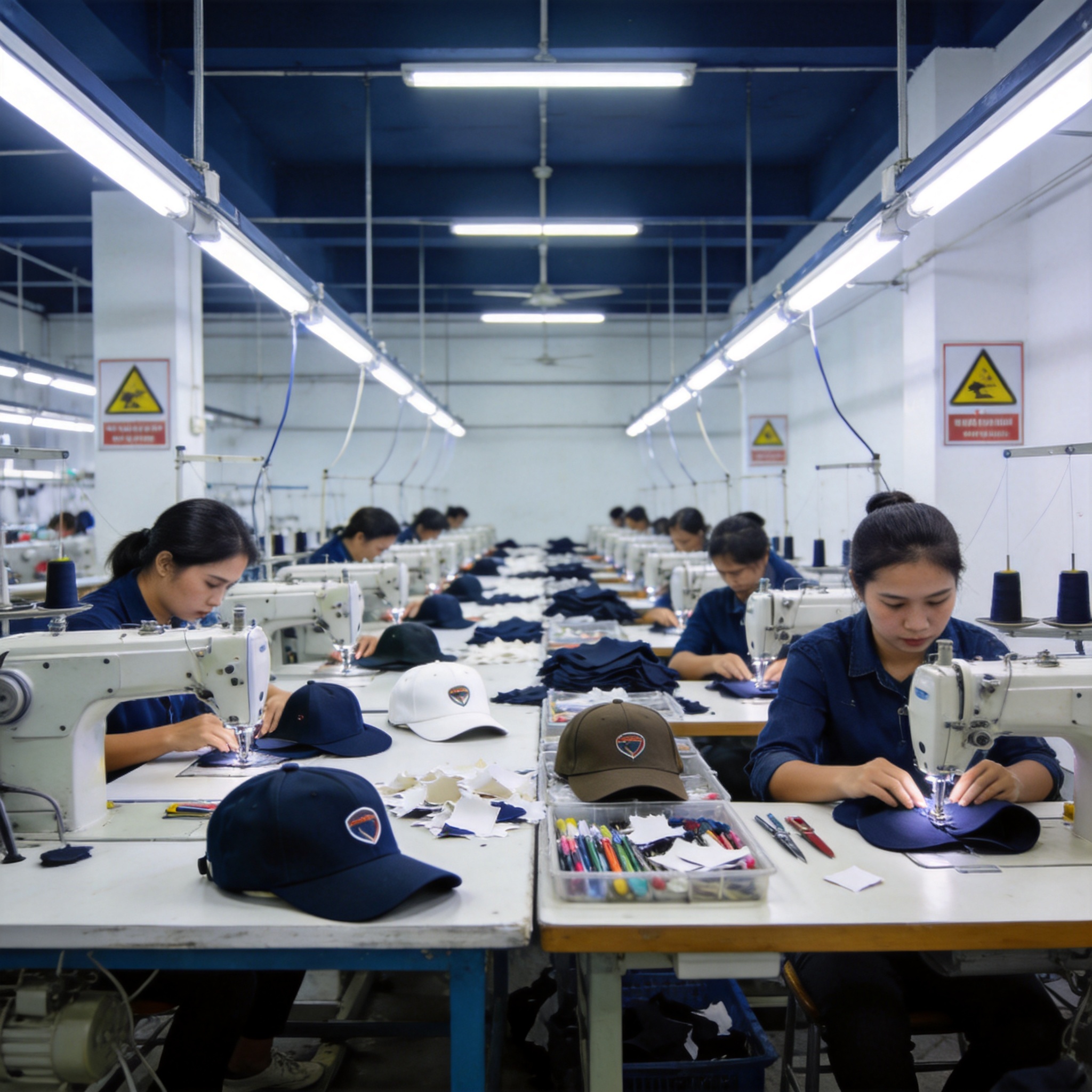
The hat manufacturing industry is experiencing a renaissance, driven by evolving fashion trends, technological advancements, and a growing demand for personalized products. From streetwear staples to high-fashion statements, hats have transcended their utilitarian origins to become powerful branding tools and fashion essentials. This article synthesizes insights from industry blogs and manufacturing expertise to provide a holistic view of modern hat design.
2. Design Trends Shaping the Industry
2.1 Popular Hat Styles
Baseball Caps: Remain a timeless choice, with options ranging from classic curved brims to flat-brim snapbacks.
Bucket Hats: Experience a resurgence, particularly in retro-inspired and fashion-forward designs.
Trucker Hats: Combine breathability with street-style appeal through mesh-back designs.
Beanies: Evolve beyond winter wear, with lightweight and decorative knits gaining popularity.
5-Panel & 6-Panel Hats: Favored by skate and surf brands for their distinctive silhouettes.
2.2 Material Innovations
Sustainable Fabrics: Recycled polyester and organic cotton are becoming industry standards.
Performance Materials: Moisture-wicking and UV-protective fabrics cater to active lifestyles.
Mixed Media: Combining leather, wool, and technical fabrics creates unique textural contrasts.
3. Technical Precision in Design
3.1 The Importance of Tech Packs
A detailed tech pack is crucial for translating design concepts into manufacturable products. Key specifications include:
Brim Curvature: Specify exact millimeter tolerances (±1.5mm standard) to avoid costly misinterpretations.
Panel Construction: Define seam convergence points with precision (±0.8mm tolerance).
Thread Tension: Specify T-35 tension to prevent brim puckering.
Placement Measurements: Use exact measurements rather than relative terms like "centered."
3.2 Customization Techniques
Embroidery: 3D puff embroidery adds dimension, while flat embroidery offers clean logos.
Printing: Screen printing for bold graphics, sublimation for all-over patterns.
Patches: Leather, woven, or rubber patches create textural interest.
Hardware: Custom buckles, snaps, and eyelets enhance brand identity.
4. Manufacturing Partnerships
4.1 Choosing the Right Manufacturer
Experience: Look for factories with proven expertise in your desired hat styles.
Certifications: ISO and BSCI certifications indicate quality management and ethical practices.
Communication: English-speaking project managers facilitate smooth collaboration.
Location Advantages: Vietnam offers competitive pricing and skilled craftsmanship.
4.2 The Role of Prototyping
Sample Development: Typically takes 7-10 working days for initial prototypes.
Revision Process: Allow 1-2 rounds of revisions to perfect the design.
Pre-Production Approval: Finalize all specifications before bulk production begins
5. Case Study: DEVCOM's Approach
DEVCOM, a leading hat manufacturer in Vietnam with an office in Qingdao, China, exemplifies modern manufacturing excellence. Their OEM/ODM services combine:
Premium Quality Control: In-house QA teams performing AQL inspections.
Flexible Production: Accommodating both small test runs and large-scale orders.
Comprehensive Services: From design consultation to final packaging and shipping.
Strategic Location: Leveraging Vietnam's manufacturing strengths while maintaining close client communication through their Chinese office.
6. Conclusion
Successful hat design requires balancing creative vision with technical precision and manufacturing expertise. By understanding current trends, mastering technical specifications, and partnering with capable manufacturers like DEVCOM, brands can create headwear that stands out in both style and quality. As the industry continues to evolve, those who embrace both the art and science of hat design will lead the market.